
Author name: admin

Blog

Customs value, or Where do these numbers come from, Mr. Inspector Semen Semenych Petrenko?

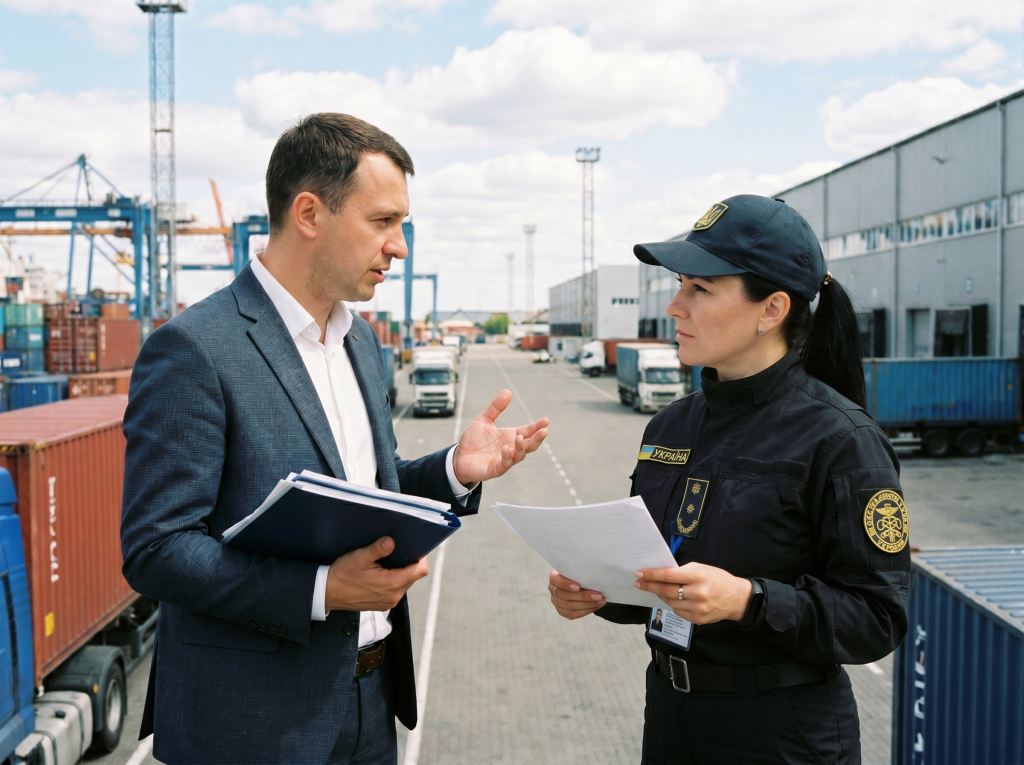
Every importer comes to a point in their life when they are faced with the eternal question: “Why do customs officials think my Chinese slippers are worth the same as Italian loafers?” And it’s simple. This is the customs value. It’s like female logic: formally it’s calculated based on the invoice, but in reality, it’s calculated based on what the inspector sees. What is customs value? The Customs Code of Ukraine, in Article 49, tells us that – The customs value of goods moving across the customs border of Ukraine is the value of goods used for customs purposes, which is based on the price actually paid or payable for these goods. As Aunt Tsilya from Odessa would say, “And customs officials are incomprehensible to the importer))))” This is when you have agreed with a Chinese for $2, and the customs officer says:— Dear, such a wonderful product cannot cost $2. We bought it for $5. We remember. And they add:— Nothing personal, we just have a base. And a methodology. And a risk-oriented approach. What does this look like in practice? You submit the documents:Invoice — yesContract — yesPayment — yesPhoto of the product — with a soul And customs:— Why is your product so cheap?— Because the supplier is normal.— Well, well… now we will help you remember how much it really costs. Methods for determining customs value – like family advice: By invoice – if you’re lucky. By identical product – but from another supplier, somewhere in Poland. By similar product – like it looks like something else, but more expensive. Subtraction method – they take away your peace of mind. Addition method – they give you a headache. Backup method – as the last argument in a dispute with your mother-in-law. How not to go crazy Keep all documents. Even those that seem unnecessary. Customs will find meaning in them. Do not understate invoices. If you understate, then NOT TOO MUCH!!!)))) Work with a broker who knows when to keep quiet and when to say: “Mr. INSPECTOR, you yourself issued the same batch last time at this price!” Result Customs value is like the temperature in a customs officer’s office: the higher the degree, the greater the chance of correction.Be honest. But with reason.And remember: in customs, as in life, the main thing is that the documents are in order, and the inspector’s mood is stable.
Blog

Foreign economic activity outsourcing – import and export support for business

Foreign economic activity outsourcing is a professional service for businesses that import or export goods. Capital Brok Service LLC offers full support for foreign economic activity: from finding a supplier to delivering goods to a warehouse in Ukraine. We help you avoid errors in customs clearance, delays at the border, and financial risks. Our foreign economic activity outsourcing services include: Search and verification of suppliers (Europe, China, Asia). Preparation of contracts, invoices, package of documents for foreign economic activity. Organization of international delivery (by road, sea, rail). Customs clearance of import and export. Certification of products, obtaining permits. Full accounting and currency support of foreign economic activity operations. Delivery of goods “to the door”. Who is outsourcing of foreign economic activity suitable for? Small and medium-sized businesses without their own foreign trade department. Entrepreneurs who want to test the import of goods. Companies that value their time and want to avoid bureaucracy. Businesses that strive to work transparently, without the risk of fines. Capital Brok Service LLC is your reliable partner in the field of foreign economic activity, customs clearance and international logistics. Our experience in foreign economic activity allows us to quickly and effectively solve tasks of any complexity. Advantages of working with us: Cost optimization and risk reduction. Possibility of import to our company. Fast delivery from Europe, China, Asia. Transparency and control of each stage. Outsourcing foreign economic activity is an opportunity to delegate complex processes to professionals. You focus on business development, and we take on all foreign economic activity. Order a consultation today – and get an individual solution for your business. Capital Brok Service LLC – experts in customs clearance and logistics from China, Europe and other countries.

Blog

Who Is a Customs Broker in Today’s Reality?

Who Is a Customs Broker in Today’s Reality? What Functions Does a Customs Broker Perform? What’s the Difference Between a Declarant and a Customs Broker? What Should a Customs Broker Know and Be Able To Do?   A customs broker today is not just a specialist who files declarations. They are an expert working at the intersection of legislation, international trade, logistics, and the real-world challenges of moving goods across Ukraine’s customs border.   THE CONCEPT OF A CUSTOMS BROKER: WHAT DOES THE LAW SAY? According to Article 416 of the Customs Code of Ukraine: “A customs broker is an enterprise authorized to carry out customs brokerage activities and provide customs representation and declaration services on behalf of another person.”   In other words, a customs broker is a company.   So who is the “broker in the field”? That’s a customs clearance agent (Article 418 of the CCU) — an individual who performs all the procedures for customs clearance.   In everyday language, everyone calls them “brokers,” which is perfectly normal and more convenient. FUNCTIONS OF A CUSTOMS BROKER: WHAT WE DO DAILY? A customs broker represents a client in interactions with customs authorities. This includes: — Preparing documents for customs clearance — Drafting, submitting, and managing customs declarations — Determining HS codes  — Analyzing goods for non-tariff restrictions — Calculating customs value — Communicating with customs, freight forwarders, and carriers — Resolving non-standard situations   Most importantly — taking responsibility for the final result and deadlines. DECLARANT VS CUSTOMS BROKER Traditionally: — A declarant cleared the cargo of their own company — A broker cleared the cargo of clients   Under modern legislation (Article 265 of the CCU), a declarant is: – A person who independently carries out declarations in their own interest and on their own behalf (holder of the customs procedure) – A person in whose interest and on whose behalf the declaration is made (holder of the customs procedure in case of direct representation) – A person who declares on behalf of another (holder of the customs procedure) but in their own name (indirect customs representative)   This gives rise to the term “holder of the customs procedure.” What Should a Customs Broker Know and Be Able to Do? So, we have reached the key question: what knowledge and skills must a professional customs broker have to perform their work accurately and efficiently? This is exactly where the true essence of the customs broker profession is revealed — and here is why. Sometimes, a broker deals with routine and repetitive imports, such as weekly shipments of mandarins from Turkey. The process is familiar, the documentation is standardized, and only a few parameters in the customs declaration need to be adjusted. The goods remain the same, the sender and receiver remain unchanged — nothing complicated. But everything changes when a customs broker must process multi-item declarations containing hundreds of different product positions. In this case, the broker must: verify the regulatory requirements for each item, check whether any restrictions or prohibitions apply, determine if additional permits or certificates are required, correctly assign the HS code, accurately calculate the customs value. These complex cases reveal the broker’s professionalism, precision, and ability to work under time pressure. Clients expect more than just a submitted declaration. They expect a high-quality customs brokerage service — without delays, penalties, or unnecessary costs. Therefore, a professional customs broker must: deeply understand the procedures of import and export customs clearance; be well-versed in foreign economic activity (FEA) regulations; have solid knowledge of customs, tax, and civil legislation; constantly monitor updates in regulatory frameworks; have hands-on experience working with various product categories and customs regimes. In essence, a customs broker is not “someone who fills out a form,” but a specialized expert who takes responsibility for the entire customs clearance process and minimizes risks for the business. ABOUT CAPITAL BROСK SERVICE LLC We are a customs brokerage company with 15 years of experience, based in Kyiv. Over the years, we have handled: — Various industrial equipment — Raw materials for production — Food products — Industrial goods — Spare parts — Vehicles, and more We don’t just submit declarations. We solve problems. We take responsibility. We work so that you and your business remain calm.   Author: Yuriy Mashchenko, Founder of Capital Broсk Service LLC 15 years of experience in customs and logistics.

Blog

Direct and indirect customs representative: who’s who in the customs theater of Ukraine

Boys and girls, sit back, because now we will have a story not about love, but about customs. And this, as you know, is love of its own kind – with a declaration, UKT FEA codes, and responsibility in both pockets. At the center of the plot are two characters: the Direct and Indirect Customs Representative. There are two of them, as in a classic film, but their characters are different. Like Verka Serdyuchka and Oleg Vinnyk. 🎩Direct customs representative: the guy on the instructions This one is like an accountant on a diet: strictly following the rules, without improvisation. He acts on behalf of and in the interests of the client. He prepares documents, goes through customs, reports — but all this is in the client’s name. That is, if something goes wrong (and it, as a rule, always goes wrong), then the client himself is responsible for everything. A direct representative is like a taxi driver who takes you to customs, opens the door, and says, “Here, sir, is your stop. Go ahead.” 🎭 Indirect customs representative: a guy with character But the Indirect Customs Representative is a real magician. He acts on his own behalf, but in the interests of the client. And this, friends, is important: because in the documents – he, and the money and goods – the client. That is, he draws up and is responsible for everything together with the client. Solidarity, like two brothers on “MMM” in the 90s. In the event of a customs incident – both pay. This is not “your mother will clean up”, this is “everyone will be hurt.” ⚖️ Why did all this appear at all? Because someone did sit down and think: “What if we could make responsibility a little more honest?” And they came up with an idea. The changes came with the Law of Ukraine No. 3926-IX of 08/22/2024, which entered into force on April 19, 2025. The law clearly spelled out: who is responsible for whom, when and in what form. Everything is honest, almost like in love — but here with VAT. ✅ How to choose who to go into a customs battle with? – Direct — when you are responsible for everything and want to control everything. As a businessman with experience: “I’m better off alone.”– Indirect — when you want someone to help you with some of the problems. Like fitness with a trainer, but with declarations. 🤔 What can we take away from all this? In short, you need to know who you are dealing with. A customs representative is not just an uncle with a seal, he is a partner in the Criminal Code… oh, in the Customs Code. And you either have to work honestly with him, or not work at all. And if you need something without unnecessary pathos, honestly, with experience and even with coffee – contact Capital Brok Service. Because we are not just brokers, we are like old friends who will draw up a declaration at night, and during the day they will also tell you how best to transport sleeping bags from China.

Blog

Customs inspection of fabric, or “It might be silk… with warheads inside”

The container arrived.40 feet.Fabric. Rolls.Documents are like a book: everything is written, everything is correct. Contract, invoice, certificate, payment, oath of honesty – everything is there. But at customs there are people with intuition. They have a sense of smell. Professional.And here he stands, the inspector, and says with a smile:— Let’s take a look. You understand: not to look is a sin. But to look is holy. You open the container.The first roll is gray polyester.The second is green.The third is with flowers. The inspector skillfully irons the fabric.— Is it polyester for sure?— Yes.— And to the touch — if not polyester. Or very good polyester. Or the wrong polyester. Or silk! And silk is another story… — And why is it “100% polyester” on the invoice, but nothing on the roll?— Because they put it that way.— And what if it’s not polyester, but radioactive taffeta? What does this look like in practice? You open the container.The first roll is gray polyester.The second is green.The third is with flowers. The inspector skillfully irons the fabric.— Is it polyester for sure?— Yes.— And to the touch — if not polyester. Or very good polyester. Or the wrong polyester. Or silk! And silk is another story… — And why is it “100% polyester” on the invoice, but nothing on the roll?— Because they put it that way.— And what if it’s not polyester, but radioactive taffeta? Result Customs inspection is a theater.You are the main character. The fabric is like a scenery.And customs is a director, producer and spectator in one person. Curtain))) Next will be…

Scroll to Top