If you export goods you manufacture to EU countries, a EUR.1 certificate may entitle your buyer to preferential import duties. Without the certificate, the goods are the same, but your buyer pays a higher duty at the EU border.
We’ll tell you whether your goods qualify for a EUR.1 certificate.
Processing time:
Usually within one working day.
Certificate fee:
The certificate itself is issued by customs free of charge.
What it is and who needs it
EUR.1 explained simply
A EUR.1 certificate confirms the Ukrainian origin of goods and entitles the buyer to preferential customs duties under the Ukraine–EU Association Agreement. Customs issues it based on verified information about how the goods were produced. Eligibility for preferential treatment also follows the Regional Convention on pan-Euro-Mediterranean preferential rules of origin, which Ukraine joined under Law No. 2187-VIII of 8 November 2017.
Who needs it
Manufacturers exporting finished products to the EU, including textiles, furniture, household goods, paint, and building materials.
Companies whose buyers’ price competitiveness depends on the import duty charged at the EU border.
Section III, paragraph 3 of Order No. 139
Documents required
These are submitted to customs to obtain the certificate.
Application from the exporter — in writing or electronically, including a declaration of the goods’ origin.
Completed EUR.1 certificate form — or an electronic copy if the form was completed by hand.
Supplier’s (manufacturer’s) declaration for goods with preferential originating status — or a long-term supplier’s declaration for regular shipments, so a separate declaration is not needed each time.
Supplier’s declaration for materials — if materials from other countries that are parties to the Convention are included under cumulation rules.
Binding origin information decision — if available. A previously issued customs decision can speed up the review.
Cost
Customs issues the certificate itself free of charge; the state does not charge an issuance fee. You pay only for preparing the documents and support throughout the process.
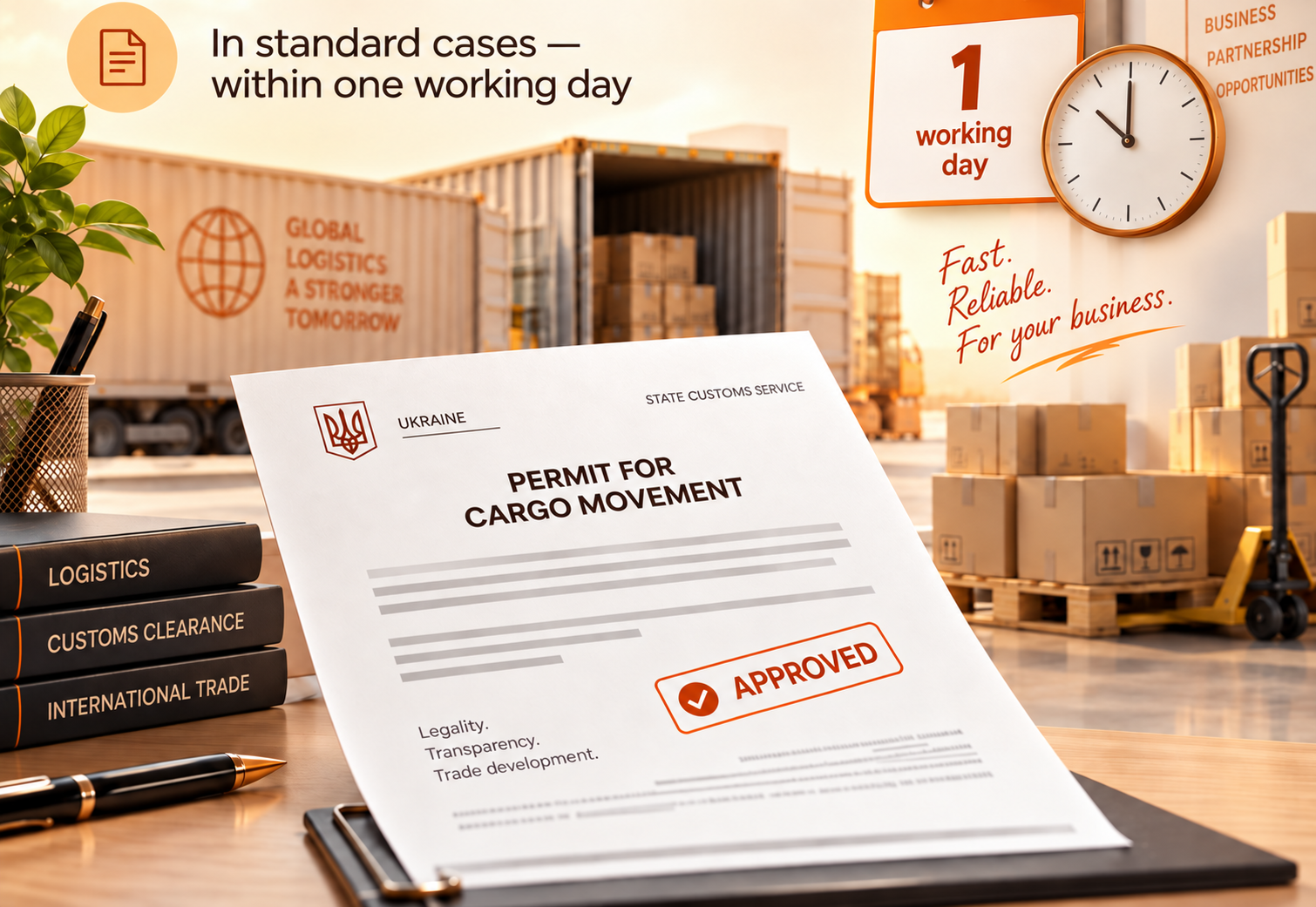
Customs decides whether to issue or refuse the certificate as soon as possible after registering the application, effectively within one working day.
Exception
up to 10 working days
If the exporter has previously provided inaccurate information about the goods’ origin, or does not manufacture goods subject to trade remedies, customs may request additional documents. The applicant may submit them within three working days of the customs request.
4 months
The certificate is valid for four months from its date of issue (Article 23 of the Convention). During this period, the buyer in the EU must submit it to their customs authority.
Common challenges
What to expect
The most common challenge is the volume of paperwork for the first application, rather than the rules themselves. If you are applying for a EUR.1 certificate for the first time, you will need to gather considerably more documents, including your company’s registration documents, an extract from the register, and the contract with the buyer, than you will for later applications. We provide the full list in advance, show you how to complete each document, and check everything before submission to help prevent a refusal caused by a technical error or an incomplete application. Subsequent applications for the same client are much faster and simpler because the main set of documents has already been verified.
Why CBS
We do more than fill out a form
We support the entire process. Before submitting the documents, we check whether the goods meet the rules of origin to help avoid a refusal, which is also provided for in the regulations (Section III, paragraph 8), and lost time.
Call Me
Залиште Ваш номер телефону і менеджер передзвонить Вам найближчим часом.
Call Me
Залиште Ваш номер телефону і менеджер передзвонить Вам найближчим часом.